
Would you like to lose 40 pounds in 90 days?
Yes? Then you have come to the wrong website. 95 percent of diets work in the first 90 days and then fail over the next 6 to 9 months. If it took you 30 years to gain the 40 pounds, they are not coming off and staying off in 90 days, unless you're using Semaglutide, which has its own very serious issues.
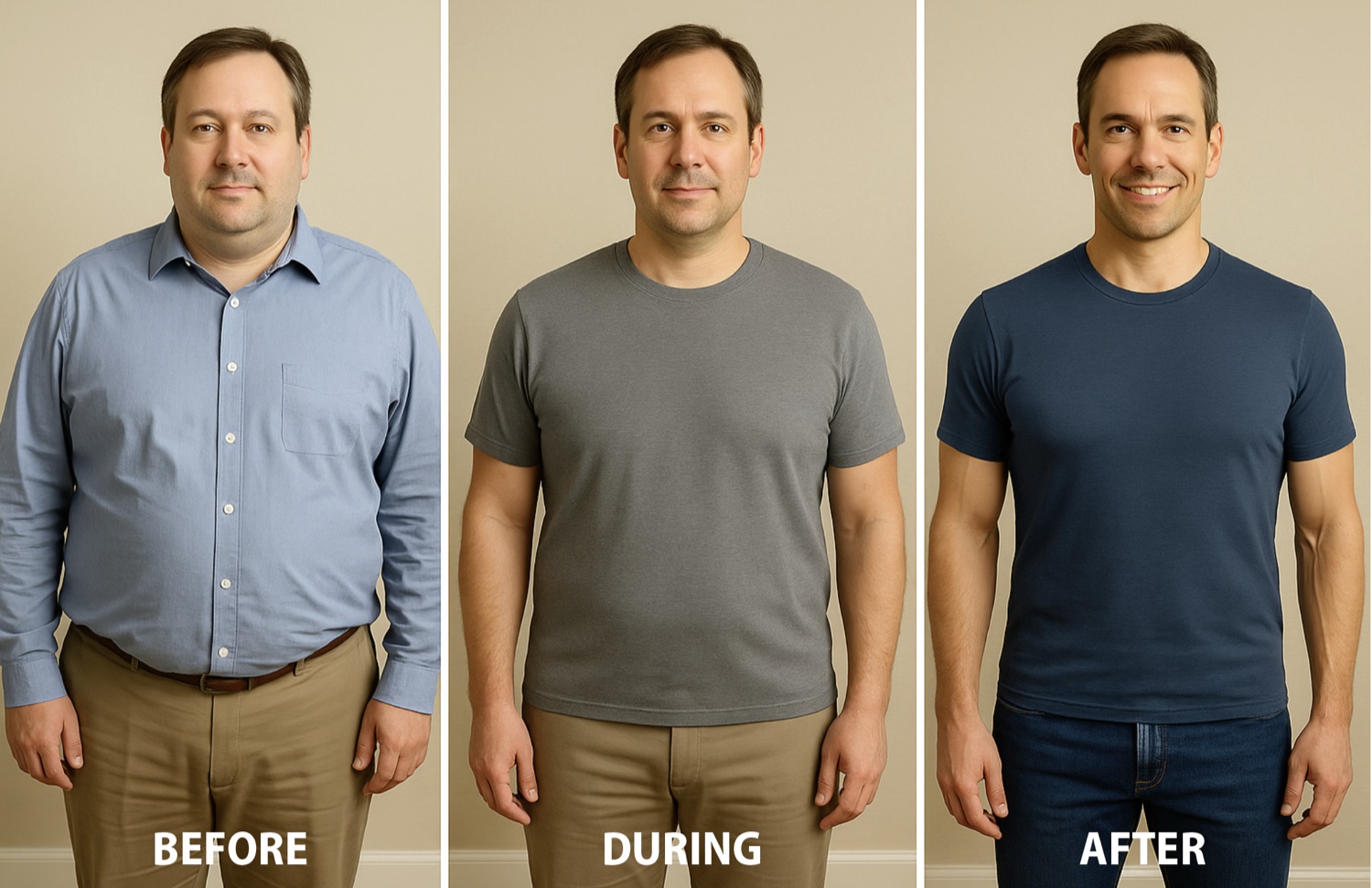
That magical weight-loss story is as real as the photo above, which was generated in seconds by AI.
There's a better way.
For the rest of us, we can lose weight slowly and work to keep it off. It's not a crash program. It's a new lifestyle. It's small, incremental changes that aren't too different from your life today, but the little differences add up. So let me ask again.
Would you like to lose just one pound a week until you're back at your normal weight?
One pound a week sounds doable, but it's 52 pounds a year. If it took you 25 years to gain 50 pounds, do you really think it will all come off in one year and stay off? Again, you're not looking for weight loss, you're looking for a guy like Dr Spencer, who promises you'll lose one pound a week and makes it sound reasonable. Try him, then come back here when it doesn't work.
Lending your current pounds to your future self
Crash diets, fasting, and GLP-1 drugs all work the same way: they borrow a lighter body from your future self. You get the honeymoon, then the interest payments start. You realize that 20-30 percent of the weight you lost was muscle. You don't want to keep paying, yet you can't taper off. You're caught in a trap. If you do stop, the weight comes roaring back. You lost muscle and money. What did you gain?
Equity-based weight loss is slower and it's work: protein, strength, sleep, and a diet redesigned around how your body actually responds. The difference is that when you're done, you own the result. Nobody can repossess it.
Would you like to lose five pounds in 90 days and keep those pounds off forever?
Yes? Then you have come to the right website. That's 20 pounds a year, which is about all anyone can lose and keep off forever. The first 25 percent of the work is losing the weight. The next 75 percent is keeping it off. Once you're sure you have control and the weight isn't coming back, you can push on.
If you do it right, you can lose 20 pounds in the first year and perhaps, depending on you and your body, another 20 in the second year, and keep it off for good. That's as much as 40 pounds in two years, though it may take four, because almost all the work is in maintaining the loss. That's reality. It's also just two to four years away, which isn't that bad. Look back four years ago. Were you trying to lose weight then? How did that go?
Strategy first
Ask any dietician or nutritionist, "What's the healthiest diet?" If they start lecturing you about a healthy diet, maybe a Mediterranean diet, a low-carb diet, or a low-fat diet, just leave. There is only one honest answer to that question: "I would need to see your bloodwork, understand any pre-existing conditions, and learn your exercise and diet history before I could recommend a diet for you."
Strategy first. That means I need a recent blood test. If you don't have one, I'll send you a sheet with the tests I want. The three numbers that matter most are:
- OGTT, for insulin resistance
- ApoB, for cardiovascular disease risk
- The number of pounds of fat to lose
With those three, we can design your diet plan.
You can't lose fat and gain muscle at the same time. When you read about people doing both, you are reading marketing. It's theoretically possible, but in practice, for most people, it isn't. First you lose the fat and build your cardio. Then you add muscle later. We aim for body fat below 15 percent for men and under 25 percent for women. The longer you've carried the weight, the longer it takes to lose it and keep it off. You'll need a combination of diet, exercise, and supplements, and we'll build a program you can actually stick with. No fads, no crash diets, no drugs.
The name of this game is consistency
If you are coachable and patient, I can get you to your goals. I won't promise miracles. In fact, go with the person who promises miracles, then come back when it doesn't work. Set realistic expectations and plan on a slow, 180-degree transformation that has everyone wondering how you did it, over two years, not two months.
You'll get weekly individual instruction and feedback, we'll track your progress, and you'll keep your commitments.
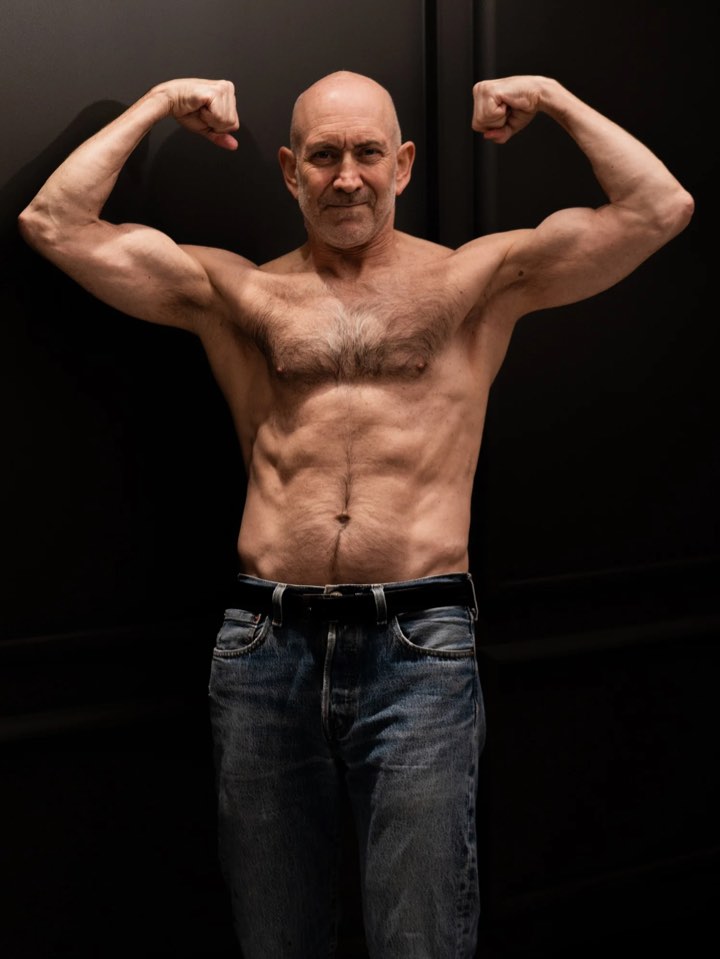
Your coach eats his own cooking
I'm David Siegel. I'm 66. I've carried the belly fat, fought the insulin resistance, and rebuilt myself after a stroke, two hip fractures, and a spinal fusion. Today I'm in the best shape of my life, without a single shortcut, because shortcuts are how I got hurt in the first place.
Mike, one of my clients, put it this way: "He gave me the incentive to get active again and work back into the shape I was in 20 years ago. I should have started sooner."
So should you. The second-best time is a conversation this week.
Tell me where you're starting from
Get in touch and tell me what's going on. This goes straight to my inbox and I reply personally, usually the same day. I take five clients at a time.